
Sacred Valley Cusco Tours
Short Trekking Route from Ollantaytambo to Machu Picchu
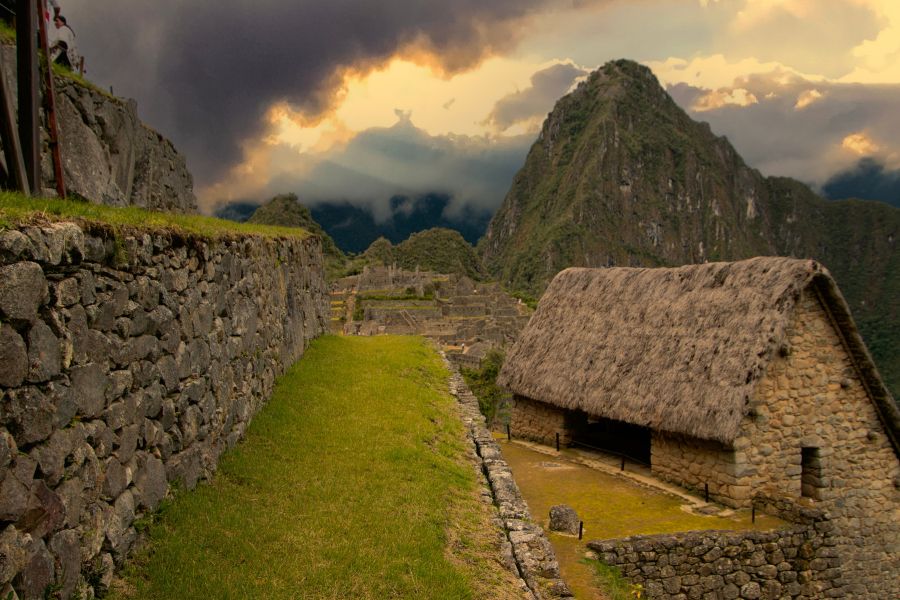
Route overview Short Trekking Route from Ollantaytambo to Machu Picchu
- Total duration: 2 days
- Hiking distance: approximately 9–12 km (5.6–7.5 miles)
- Main hiking time: about 5–6 hours on Day 1
- Difficulty level: moderate, with uphill stone paths and uneven terrain
- Environment: Andean cloud forest with changing altitude and vegetation
This trek allows hikers to arrive at Machu Picchu in Peru on foot through the Sun Gate, following part of the original royal Inca road.
Day 1 — Train journey and short Inca Trail hike
The experience begins with a scenic train ride from Ollantaytambo along the Urubamba River valley toward the trailhead at Km 104, where the hike starts.
Archaeological sites and landscapes along the trail
Shortly after beginning the walk, travelers reach Chachabamba, a small ceremonial and administrative Inca site located beside the river and surrounded by dense vegetation.
From there, the trail ascends through cloud-forest mountain scenery, stone stairways, and original Inca pathways until reaching Wiñay Wayna, one of the most remarkable archaeological complexes on the Inca Trail.
This site features:
- Large agricultural terraces built into steep slopes
- Stone residences and ceremonial sectors
- Water channels and fountains still visible today
After visiting Wiñay Wayna, the hike continues toward Intipunku, the historic Sun Gate that offers the first panoramic view of Machu Picchu from above.
From Intipunku, a final descent of about 40 minutes leads to the entrance area of Machu Picchu.
At the end of the day, travelers take a shuttle bus down to Aguas Calientes for an overnight stay.
Day 2 — Guided visit to Machu Picchu and return to Ollantaytambo
On the second morning, travelers return by shuttle bus to Machu Picchu for a guided exploration of the archaeological city.
During the visit, you will observe:
- Agricultural terraces engineered for mountain farming
- Ceremonial temples, plazas, and residential stone sectors
- Sacred astronomical and ritual structures
- Panoramic views of the surrounding Andean peaks
- After the guided circuit and free exploration time, the journey concludes with:
- Bus descent to Aguas Calientes
- Train return through the Sacred Valley
- Arrival back in Ollantaytambo
What makes the short trekking route unique Short Trekking Route from Ollantaytambo to Machu Picchu
Walk along authentic sections of the original Inca Trail
Visit two significant archaeological sites before Machu Picchu
Enter Machu Picchu through the Sun Gate viewpoint, not only by road
Combine moderate adventure with comfortable logistics in just two days
This balance makes the short trek one of the most accessible hiking routes to Machu Picchu.
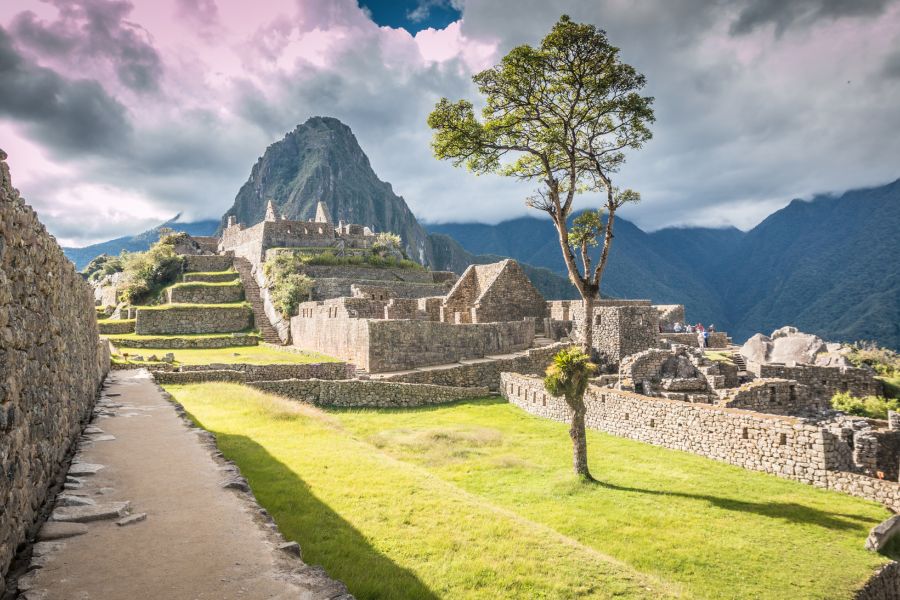
What you will see on the Short Trekking Route
Throughout the short trekking journey from Ollantaytambo to Machu Picchu, travelers experience a gradual transition from Andean valley landscapes to dense cloud-forest ecosystems, combined with important archaeological remains from the Inca road system.
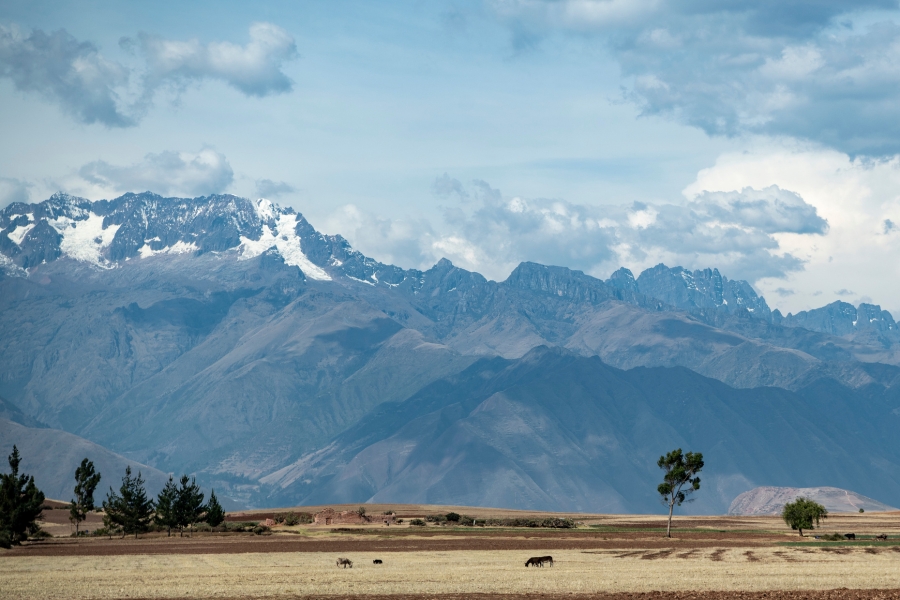
Scenic Sacred Valley and Urubamba River corridor
The train approach to the trailhead reveals:
- Narrow mountain canyons carved by the Urubamba River
- Agricultural terraces and rural Andean scenery
- The visible shift from highland terrain to humid subtropical vegetation
This transition marks the geographic entrance to the Machu Picchu Historic Sanctuary.

Inca archaeological sites along the trail
During the hike, two significant Inca complexes appear before reaching Machu Picchu:
- Chachabamba — a small ceremonial and administrative site located near the river, believed to have functioned as a control or ritual point on the ancient trail.
- Wiñay Wayna — one of the most remarkable Inca constructions on the route, featuring steep agricultural terraces, stone dwellings, ceremonial spaces, and preserved water channels integrated into the mountainside.
These sites demonstrate how the Incas combined engineering, agriculture, and spirituality within extreme terrain.
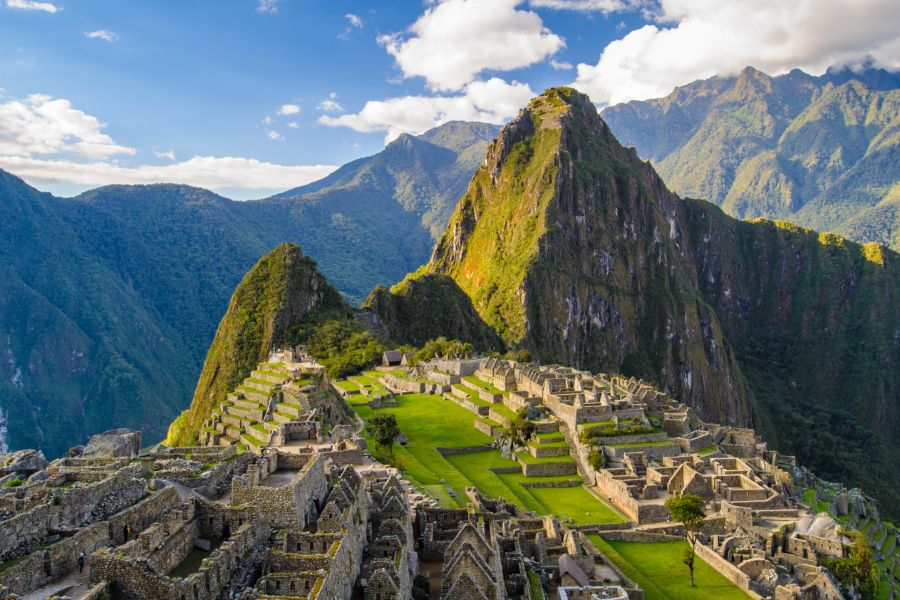
First panoramic view from the Sun Gate
One of the most memorable moments occurs at Intipunku (Sun Gate), the historic entrance used by Inca travelers approaching Machu Picchu on foot.
From this elevated viewpoint, hikers obtain:
- The first wide view of Machu Picchu from above
- Alignment with sunrise direction during certain seasons
- A visual understanding of how the citadel is positioned between steep mountains
Traveling from Ollantaytambo to the legendary Inca citadel of Machu Picchu is one of the most meaningful experiences of any journey through Peru. Thanks to its strategic location in the Sacred Valley, Ollantaytambo serves as the main departure point for several ways to reach Machu Picchu: one-day train excursions, overnight programs in Aguas Calientes, and trekking routes that follow ancient Andean paths.
Practical considerations Short Trekking Route from Ollantaytambo to Machu Picchu
- The hike occurs in humid cloud-forest conditions, where weather can change quickly.
- Entry to Machu Picchu is regulated by official visitor circuits and schedules.
- Advance booking is important because permits for the short Inca Trail are limited.
Who this trek is best for Short Trekking Route from Ollantaytambo to Machu Picchu
This experience is ideal for travelers who:
- Want a real hiking approach to Machu Picchu
- Have limited time but still seek adventure
- Can manage moderate physical effort at altitude
- Prefer a mix of nature, archaeology, and guided exploration
A reasonable fitness level is recommended due to uphill walking and stone steps.